




Related solution
Investment management
Turning our investment legacy into
long-term growth for your portfolio.
Inflation is the popular answer, but potentially the wrong one
Higher yields in the midst of stable inflation expectations
10-year Treasury yield vs. long-term inflation projections
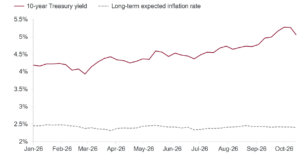
Source: Bloomberg, as of October 15, 2026. *The long-term expected inflation rate is the “5 year/5 year forward inflation rate” – the imarket-implied inflation rate for the 5-year period beginning 5 years from now, derived from the swaps market.
Rising bond yields have been one of the key investment developments of 2026, generating negative returns for most fixed income investments. Media coverage often points to stubborn inflation and concerns about high energy costs as the main drivers of higher yields. A closer look suggests otherwise.
The chart shows the rise in the 10-year Treasury yield this year, which is up by more than a full percentage point to its highest level in nearly 20 years. The grey line represents long-term inflation expectations embedded in market pricing.* It has barely moved, hovering around 2.5%. This suggests that inflation is not the main catalyst behind the rise in yields.
Instead, it is the real yield—the premium above expected inflation—that has pushed Treasury rates higher this year. Possible reasons include a resilient economy, uncertainty around monetary policy under new Fed leadership, and growing unease over the $40 trillion federal debt burden. If yields continue to rise, both the economic outlook and the equity bull market could come under pressure.
What we’re watching this week
Tuesday: The real estate market will be in focus, with reports on Housing Starts and Pending Home Sales for September.
Throughout the week: Third-quarter earnings continue, with many regional banks, along with Meta, Tesla, American Express and 3M reporting.