



International diversification through a different lens
A focus on companies, not countries
More growth-oriented tech in the US, more value and income abroad
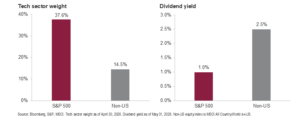
Traditional investment theory emphasizes the benefits of international equity diversification, arguing that exposure to different countries and currencies expands the opportunity set in a globalized economy and reduces overall portfolio volatility. Ultimately, however, an investor owns companies, not countries, and the characteristics of those companies greatly impact returns.
The two charts above illustrate this point well. Technology companies are two and a half times more heavily represented in the S&P 500 than in the index of non-US stocks. This is a major explanatory factor in the outperformance of US equities over the last five- and ten-year periods. The non-US basket has a much higher dividend yield due to greater exposure to financials, industrials and other payout-oriented but slower growing sectors.
The performance drivers of these two baskets are very different—that is the essence of diversification. When it comes to equity investing, we believe in a global mindset. However, asking “what company?” may prove more fruitful than asking “what country?”
What we’re watching this week:
Wednesday: Consumer Price Index data for May is released. An elevated reading is expected, and the year-over-year increase could exceed 4%. Markets will scrutinize the core (excluding food and energy) component.
Thursday: The European Central Bank will announce its rate decision. Most analysts expect a small rate hike in response to higher recent inflation readings. This would be the first policy shift since a rate cut in June 2025.

Related insights and perspectives


Financial markets outlook: Third quarter 2026
