




Related solution
Investment management
Turning our investment legacy into
long-term growth for your portfolio.
July saw new tariffs and intensifying USMCA negotiations
12-month tariff revenue estimate based on existing policy
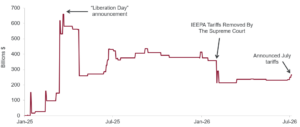
Source: Strategas Securities, US Treasury Department, as of July 24, 2026.
The Trump administration announced three new tariff measures in the second half of July, targeting certain goods from Brazil and Canada, as well as imports from 60 countries linked to forced-labor concerns. Meanwhile, the United States, Canada, and Mexico have stepped up talks ahead of a scheduled review of the trilateral USMCA trade agreement signed in 2018.
The chart shows the sharp swings in potential Treasury tariff revenue since the President’s sweeping “Liberation Day” announcement in April 2025. Subsequent policy moderation, along with the Supreme Court’s decision striking down a large share of the tariffs, has reduced the impact. The economy has remained resilient in the face of this moderate trade-related tax hike.
Most of the July tariff announcements replace measures that had either expired or been struck down, suggesting limited macroeconomic impact. The Supreme Court ruling has also led the Treasury to issue refunds, returning more than $100 billion to US companies so far. Trade diplomacy will remain relevant for markets as USMCA negotiations continue and as Presidents Trump and Xi meet in September.
Monday: The ISM Manufacturing survey for July is reported, providing a timely read on the industrial economy.
Friday: The July employment report is released. While June job growth was relatively slow, economists are looking for a rebound in July, along with a stable unemployment rate.
Throughout the week: Several major semiconductor companies report earnings, including Advanced Micro Devices (Tuesday). The “SOX” semiconductor index has retreated more than 20% since reaching an all-time high in late June.


