




Related solution
Investment management
Turning our investment legacy into
long-term growth for your portfolio.
Rate hike driven by persistent price pressures
The Fed’s policy rate is moving higher again
Federal Funds Rate, percent
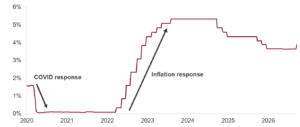
Source: Bloomberg, as of September 17, 2026.
Last week’s interest rate hike by the Federal Reserve marked a return to the central bank’s primary mission this decade: raising interest rates to combat inflation.
The chart shows the path of the Fed’s key policy rate, the federal funds rate. The decade began with extraordinary measures as the Fed cut the rate to zero, alongside other highly accommodative policies, at the onset of the COVID crisis. These actions, together with highly stimulative fiscal policy, jump-started the economy. But the recovery also brought the highest inflation since the 1970s. The Fed responded with eleven successive rate hikes. As price pressures moderated, the Fed gradually lowered rates beginning in late 2024.
Chair Kevin Warsh said, “Inflation remains elevated,” in explaining last week’s rate increase. The median projection by the Fed’s monetary policy committee anticipates just one more 0.25 percentage point rate increase before pausing. That would make this tightening cycle much milder than usual and may prove overly optimistic.
What we’re watching this week
Thursday: President Trump hosts Chinese President Xi at the White House. Trade and tariffs are expected to be a major focus, along with geopolitical risks in Ukraine, the Middle East, and Taiwan. It is unknown if they will discuss global guardrails on AI development.
Friday: Durable goods orders for August are released. Economists will be assessing whether capital spending is broadening beyond AI- related investments.


