




Related solution
Investment management
Turning our investment legacy into
long-term growth for your portfolio.
Global asset class total returns through 9.30.26*
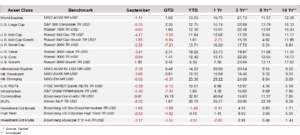
Yields moving higher: Rising bond yields created headwinds for risk assets in September. With the 10-year yield moving above 5% for the first time in more than 20 years, a risk-off sentiment swept through equities and rate-sensitive investments. The Russell 2000 Index fell more than 5%, the Russell Mid-Cap Index declined 4%, and MLPs fell more than 8%. Inflation concerns have continued to grow as the war in the Middle East continues and higher energy prices persist.
Fed policy/inflation: The Federal Open Market Committee (FOMC) unanimously voted to raise its target benchmark rate by 0.25% in September. Although markets were expecting the increase, post-press conference comments by Chair Warsh stoked concerns that the rate-hike cycle may not be ending soon and that more hikes could be coming. Inflation concerns continue to grow as energy prices move higher, while focus has shifted to rising diesel costs and their ripple effects throughout the economy.
Global debt concerns: Yields have been rising across global bond markets, putting pressure on debt service costs for outstanding debt, particularly in developed and developing countries that added to their debt burdens during and after the pandemic. The selloff across global bond markets has been widespread and has been a significant driver of the risk-off mentality among investors, not just in the US but globally.
Rates & oil: The two primary drivers of higher volatility in equity markets over the past two months have been higher bond yields and rising oil prices. Investors have become increasingly concerned that, without any sign of a resolution to the Middle East conflict and some stabilization in bond prices, the impact on the broader economy will begin to show in the coming months. Consumers have historically been resilient, but recent sentiment data suggests this could be changing. Inflation and higher fuel costs are starting to bite.
October key Fed meeting: The next Fed meeting will be held in late October. Between now and then, members will receive updated economic data that will be taken into consideration before they vote on another rate hike. There are some indications that voting members might be willing to hold off on an October hike, as they may want to review more data before their meeting in December. Recent market odds of an October hike have fallen from a 70% chance to just under 30%.
Earnings season kicks off: Q3 2026 earnings season kicks off on October 13. Once again, expectations are high for strong earnings results from many key sectors in the S&P 500. As of today, the overall year-over-year growth rate is expected to come in at just under 30%, driven by the energy, information technology, and communication services sectors.1 Strong earnings have provided support to equities despite the backdrop of higher rates and inflation.
1FactSet


