




Related solution
Investment management
Turning our investment legacy into
long-term growth for your portfolio.
Extended standoff in the Strait of Hormuz as energy demand rises seasonally
Crude oil inventory levels, including Strategic Petroleum Reserve
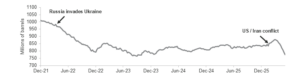
Source: Bloomberg, Energy Information Administration, as of June 10, 2026.
Oil prices have increased from $67/barrel right before the US/Iran conflict broke out to $85/barrel at the end of last week* (with a brief trip over $100/barrel in May). While significant, this rise has been milder than many forecasts, and the US economy has so far weathered the storm.
The supply shock from the obstruction of the Strait of Hormuz has largely been absorbed by drawing down oil inventories. The chart illustrates that crude stocks have declined since the conflict began. If the Strait obstruction drags on while seasonal demand for energy rises, inventories may soon offer less protection against further price increases. A durable ceasefire and opening of the Strait would ease pressure on energy prices, though restoring Middle East production to pre-conflict levels could take several months.
The US inventory drawdown is mostly due to releases from the government’s Strategic Petroleum Reserve (SPR). However, SPR flows are limited by the substantial depletion in 2022, which was used to curb price spikes following Russia’s invasion of Ukraine. Neither the previous nor current administration materially replenished the SPR, leaving less policy flexibility today.
New Federal Reserve Chair Kevin Warsh will lead his first monetary policy meeting. The FOMC is widely expected to leave interest rates unchanged. Markets will focus on whether guidance shifts from a lower rate bias in the future to a more neutral stance. May Retail Sales will be released. Despite poor sentiment and affordability pressures, consumer spending has been resilient in recent months.
Central banks in Japan, the UK, and Switzerland will announce policy decisions. A key question will be whether they follow the ECB’s lead and raise rates.
US stock and bond markets are closed for the Juneteenth holiday.


