




Related solution
Investment management
Turning our investment legacy into
long-term growth for your portfolio.
... but it's not always a bulwark against investment risk
Spot gold price, $/ounce
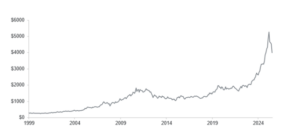
Source: Bloomberg, as of June 30, 2026.
For centuries, many investors have regarded gold as a hedge against “risk.” In reality, it has been far from perfect as a portfolio protector. But over the past four years, higher inflation rates, rising government debt, geopolitical realignment and central bank purchases have driven gold values higher. Since July 2022, gold has appreciated by 134%, outperforming the total return of the S&P 500.
Recently, gold has weakened. Prices reached an all-time high in late February, on the eve of the US-Iran conflict, but have since fallen by more than 20%. This may seem counterintuitive given the perceived risks of the conflict, and there are myriad theories about the catalysts for the decline. However, the most important takeaway is that buying gold after a perceived risky event occurs could actually undermine portfolio protection.
Historically, gold has often moved inversely with the US dollar and inflation-adjusted interest rates. However, that relationship has not been consistent in recent years. The factors influencing gold prices have been mercurial throughout its long history, and will likely remain so.
Tuesday: The June CPI report is released. Energy prices fell in June, so the headline figure could show a decline. Producer prices come out later in the week.
Thursday: June retail sales data is reported. Consensus expectations call for a fourth increase in a row.
Throughout the week: Second quarter corporate earnings season begins, with large banks scheduled to report results this week.


