




Related solution
Investment management
Turning our investment legacy into
long-term growth for your portfolio.
Financial markets are pragmatic, not partisan
President Trump’s approval rating now lags his first term
Percent job approval
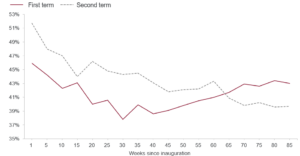
Source: Ballotpedia, as of September 9, 2026. Average of qualifying national approval polls conducted each week.
Midterm elections are approaching. Current polling and betting markets suggest that the Republicans’ narrow House majority, and perhaps their Senate majority, could be reversed. History points in the same direction: since World War II, the president’s party has lost an average of 23 House seats and 3 Senate seats in midterms.*
The chart shows that President Trump’s job approval has sagged in recent months to below its level at the same point in his first term. That is another data point supporting the scenario of Democratic gains on November 3. It is worth noting, however, that in the past two midterm cycles—the first Trump term and the Biden term—the incumbent party defied history by slightly adding to its Senate seat total.
If the midterms produce divided government, gridlock would likely ensue. For investors, the window for meaningful policy change would probably shift to after the 2028 presidential election. In the meantime, the S&P 500 has risen in the 12 months following every midterm election since 1946. It is important to end on this note: in both politics and financial markets, history is a guide, not a guarantee.
What we’re watching this week
Wednesday: August retail sales will be reported. Economists expect a strong rebound after July’s decline.
Throughout the week: Central bank policy decisions: market expectations lean toward a 0.25% rate hike by the Fed’s FOMC (Wednesday), the Bank of England is forecast to leave rates steady (Thursday), and a rate increase by the Bank of Japan is widely expected (Friday).
*Source: The American Presidency Project, updated July 12, 2026.


