




Related solution
Investment management
Turning our investment legacy into
long-term growth for your portfolio.
In some high-profile categories, yes, but it is not the primary driver
Percent price change, year-over-year
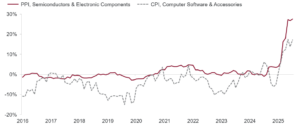
Source: Bloomberg, Bureau of Labor Statistics, as of June 30, 2026.
Many economists—including Fed Chair Kevin Warsh—are optimistic that AI adoption will enhance productivity and lower inflation over time. In the near term, however, concerns about perceived AI-driven inflation are becoming a potent political issue in a midterm election year dominated by cost-of-living concerns.
The rapid AI infrastructure buildout has driven soaring demand for semiconductors and increased computing costs. As the chart above shows, semiconductor and software prices have posted double-digit increases over the past year. Last month, Apple announced 20% price increases for laptops and tablets, citing rising costs.
While these trends have added to price pressures, it would be a mistake to view AI as the main driver of this year’s increase in overall inflation. The primary culprit has been higher energy costs related to the Middle East conflict. There was some encouraging news on inflation last week, as both the June PPI and CPI reports declined from the prior month.
Wednesday: Bellwethers Alphabet and Tesla report second quarter earnings.
Thursday: The European Central Bank (ECB) announces its interest rate decision. Following a rate hike last month, the ECB is expected to stand pat.
Friday: New home sales data for June will be reported. Housing trends have been soft for several months.


